Close

Search

Men’s Arabic Footwear

From Heritage to Everyday Wear: The New Identity of Men’s Arabic Footwear

A decade ago, if you asked someone to picture men's Arabic footwear, they would likely describe something worn at family gatherings, during prayer, or on Eid morning, then put away again until the next occasion. That picture no longer holds. Step into any coffee shop in Doha, Muscat, or Riyadh today and you will find sandals of this kind worn with everything from linen shirts to tailored trousers, on a completely ordinary Tuesday afternoon. Something has genuinely changed in how this footwear is understood, and Varisi has been paying close attention to exactly how that shift unfolded. The Modern Meaning of Men's Arabic Footwear What used to signal where a man came from now says something about how he chooses to live. Men's Arabic footwear has quietly taken on a second layer of meaning, sitting alongside its cultural roots rather than replacing them. It still nods to region and heritage, but it now also speaks to someone who values comfort, honest materials, and a slower approach to buying clothes and footwear in general. This shift has not diluted the tradition. If anything, it has given it a wider audience. Men who never grew up wearing sandals of this kind, whether through distance from the region or simply changing habits within their own families, are discovering them for entirely practical reasons and staying for the craftsmanship once they understand what went into making them. The Workshop Before the Wardrobe Before men's Arabic footwear became a daily habit, it started as a workshop skill passed from one pair of hands to the next. In small leather workshops across the Gulf and the Levant, cobblers learned to read hide before they ever picked up a knife. A poorly cured skin would crack within weeks; a well-cured one could last a decade. That knowledge rarely made it into books. It was taught by watching, repeating, and failing until the cuts became second nature. The shapes themselves were never arbitrary. A wide toe box gave the foot room to breathe in extreme heat. A low, flat sole kept the wearer grounded on sand and stone alike. Straps were positioned to avoid pressure points during long walks between prayer times. None of this was decorative thinking. It was footwear engineered by necessity, long before "functional design" became a marketing phrase. Why Younger Buyers Changed Their Minds Ask most men under forty why they now wear sandals of this style daily, and the answer rarely involves tradition first. It usually starts with comfort. The Trainers Fatigue Years of wearing trainers in 40-degree heat left a lot of men with sweaty feet, poor ventilation, and shoes that broke down within a single summer. Switching to open leather sandals solved a problem that synthetic footwear was never built to handle in this climate. Social Proof Through Travel As Gulf residents travelled more and saw how international menswear circles were referencing similar silhouettes, wearing mens Arabic sandals outside the home stopped feeling old-fashioned. It started feeling, quite simply, like good sense. A Shift Away from Disposable Fashion There has also been a quieter change in mindset. Buyers grew tired of replacing cheap shoes every few months. A well-made pair of Arabic leather sandals, by contrast, tends to improve with age rather than fall apart. How to Recognise Genuine Men's Arabic Footwear Before You Buy Not every sandal sold under this name deserves the description. Telling a genuine pair from an imitation takes a closer look than most buyers are used to giving their footwear. Press your thumb into the leather. Genuine hide gives slightly and returns to shape; cheap coated material stays stiff or feels tacky. Check the underside of the strap where it meets the sole. Hand-stitched joins are usually uneven in a way that machine work never is, and that unevenness is a good sign, not a flaw. Smell the leather. A faint, natural leather scent suggests proper tanning; a strong chemical smell often means synthetic backing. Flex the sole in your hands. It should bend with some resistance, not fold flatly like cardboard or refuse to move at all. Buyers who check these details before purchasing tend to walk away with sandals that last years rather than a single season, which is really the whole point of choosing men's Arabic footwear over a mass-produced alternative in the first place. The Doha Effect: How Qatar Changed the Conversation Around Men's Arabic Footwear Few markets illustrate this shift as clearly as Qatar. Arabic sandals in Qatar were once sold mainly in traditional souqs, aimed at an older, more conservative customer base. Over the past several years, that has changed considerably. Retailers in Doha now stock these sandals alongside contemporary menswear, not tucked away in a separate cultural section. Younger buyers walk in expecting proper sizing charts, clear material information, and finishes that suit a modern wardrobe rather than a strictly ceremonial one. This demand pushed makers, including Varisi, to raise their own standards around consistency, fit, and long-term durability, because a customer buying sandals for daily wear expects a very different level of performance than someone buying a single pair for a wedding. The result is a market where heritage and modern retail expectations now sit comfortably side by side, rather than pulling in opposite directions. What "Luxury" Actually Means in This Context The term luxury Arabic sandals gets used loosely, often attached to anything with a higher price tag. A more honest definition focuses on what actually goes into the product rather than what it costs. Material Honesty A genuinely premium pair uses full-grain leather throughout, including the insole, rather than a good-looking exterior layered over a cheaper synthetic core. Visible Craftsmanship Hand-burnished edges, reinforced stitch lines at pressure points, and symmetrical strap placement are small details, but they separate a well-made pair from one that simply photographs well. Repairability A sandal built to last should also be a sandal built to be repaired. Resoling and restitching should be realistic options, not something the design quietly prevents. This is the standard Varisi holds itself to, because calling something luxury without the craftsmanship to back it up does a disservice to a tradition that never needed exaggeration to justify its value. Choosing Men's Arabic Footwear for Life, Not Just an Occasion If you are buying your first proper pair, a few practical steps will save you from disappointment later. Wear them indoors first. Walk around your home for an hour before taking them outside, to check for pressure points early.Buy true to size, not tight. Leather stretches slightly with wear, so a snug fit at purchase usually loosens into a comfortable one.Condition the leather every few months. A light leather balm keeps the material supple and prevents cracking in dry heat.Rotate two pairs if you wear them daily. Giving leather a day to rest between wears extends its lifespan considerably. Following these steps is a small effort that pays off across years rather than months, which is exactly why so many men have shifted from treating this footwear as occasional wear to relying on it every single day. Step Into Comfort: Discover Men's Arabic Footwear at Varisi Reading about good craftsmanship is one thing; feeling it on your own feet is another matter entirely. If your current footwear rotation still leaves your feet sweating through the afternoon or wearing thin after a few months, it may be time to try something built with more thought behind it. Varisi's collection is put together by people who care whether a strap sits right after ten hours of wear, not just how a pair looks in a photograph. Browse the range, find a fit that suits your daily routine, and see for yourself why so many men have already made the change. Conclusion The story of men's Arabic footwear is not one of reinvention for its own sake. It is a story of a practical, well-considered tradition finally being recognised for what it always offered: comfort suited to the climate, craftsmanship built to last, and a design language that never actually needed updating to stay relevant. Whether someone is choosing Arabic leather sandals for a hot commute, seeking out Arabic sandals in Qatar with proper sizing and finish, or investing in a genuinely luxury Arabic sandals pair meant to last for years, the appeal comes from the same place. At Varisi, that is the standard behind every pair leaving the workshop. Frequently Asked Questions Is men's Arabic footwear suitable for everyday use, or only special occasions? Well-constructed pairs are increasingly worn daily, particularly in hot climates where breathable, flat leather sandals outperform closed footwear. How can I tell if a pair of mens Arabic sandals is genuine leather? Check for a natural leather scent, slight give when pressed, and uneven hand-stitching at the strap joins, all signs of authentic material and construction. Why has demand for Arabic sandals in Qatar grown in recent years? Retailers have shifted from treating them as ceremonial items to stocking them as everyday menswear, matching a younger customer base that wants both tradition and daily practicality. What separates luxury Arabic sandals from a standard pair? Full-grain leather throughout, visible hand-finishing, and the ability to be resoled or repaired rather than discarded after light wear. How long should a good pair of Arabic leather sandals last? With proper care, including regular conditioning, a well-made pair can comfortably last several years before needing repair.
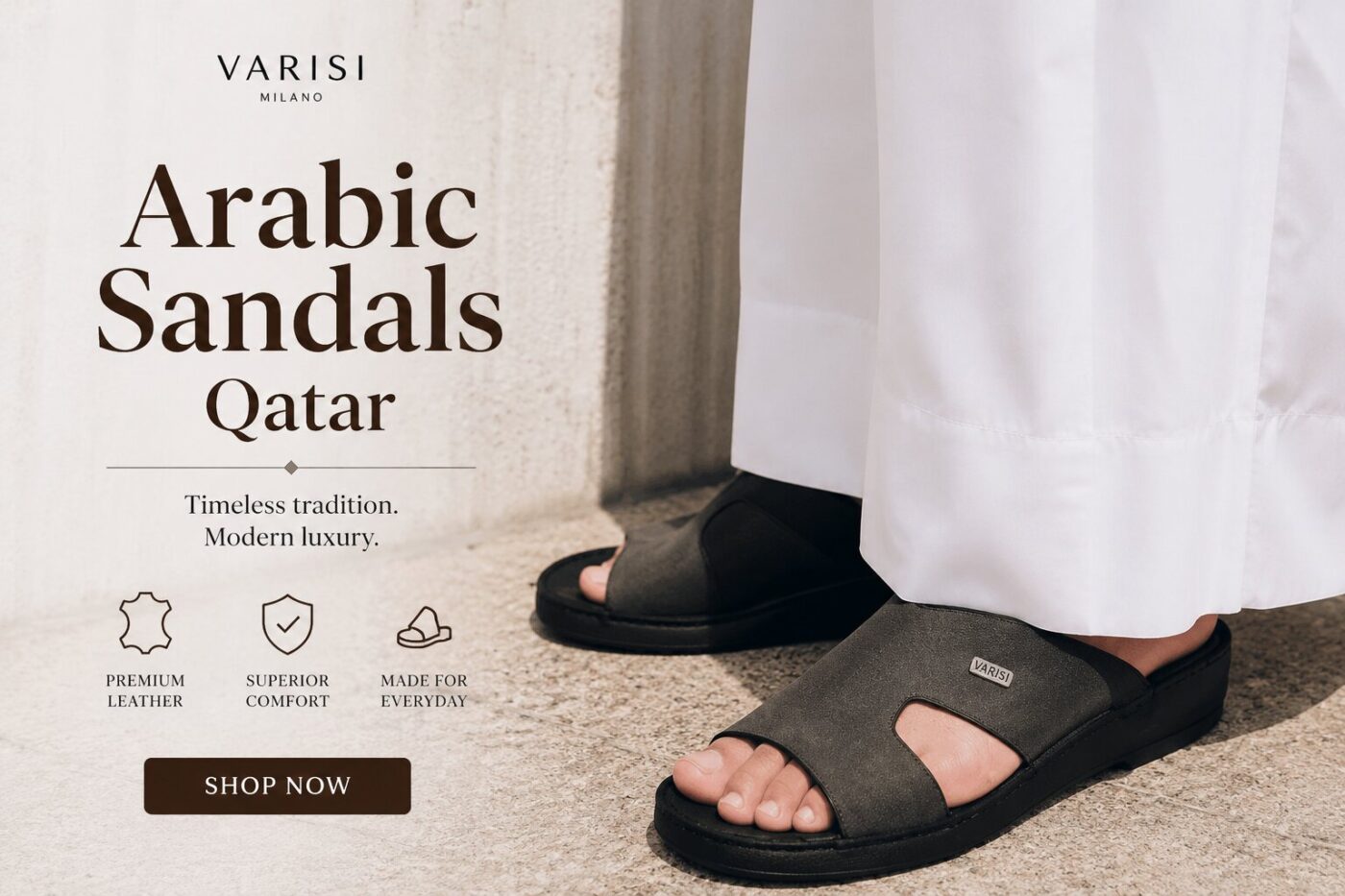
Arabic sandals in Qatar

Arabic Sandals in Qatar Are Getting a Serious Upgrade — Here’s Why It Matters

Walk through any souq in Doha and you'll pick up on something that's easy to miss at first glance. The classic look is still there — leather straps, a flat sole, that familiar Gulf shape everyone recognises. But look closer and the small things have changed. The stitching feels sturdier, the soles are noticeably lighter, and the shelves now hold far more colours and finishes than the two or three shades that used to be the only options. Arabic sandals in Qatar are quietly changing, and if it's been a while since you last bought a pair, you're likely to notice the difference. This isn't a trend piece written from a distance. Anyone who has bought footwear in Qatar over the past decade, or spoken to the craftsmen who still hand-cut leather in small workshops around the city, will tell you the same thing: comfort expectations have gone up, the definition of "formal" has widened, and buyers are far less willing to compromise on quality just because a design is traditional. Here's a closer look at what's actually driving the change. Why Arabic Sandals in Qatar Are Changing Now A few forces are pushing this shift at the same time, and none of them are fads. The climate is one obvious factor. Doha's heat isn't new, but the way people move through their day has changed. More time is spent going between air-conditioned malls, offices, and cars, and less time is spent on unpaved ground. That has allowed designers to experiment with lighter soles and thinner uppers without sacrificing durability, something that would have been riskier a generation ago when sandals had to survive rougher terrain. There's also a generational shift in taste. Younger buyers in Qatar have grown up with international travel and global fashion exposure, yet many still prefer traditional dress for daily life and formal occasions. That combination has created demand for footwear that respects heritage but doesn't look dated next to a tailored thobe or a sharp bisht. The result is a wave of luxury Arabic sandals that borrow finishing techniques from European leather goods while keeping the classic Gulf shape intact. Finally, there's simple market maturity. A decade ago, options were limited to a handful of styles at a handful of price points. Today, buyers can choose between mass-market versions and genuinely well-made pairs, and they're increasingly aware of the difference. How Arabic Sandals in Qatar Compare Across Price Points Not every buyer is chasing the same thing, and the market has grown wide enough to reflect that. At the lower end, mass-produced options still exist for people who simply need something functional and are happy to replace them every season. In the middle, there's a growing range of arabic sandals in Qatar that balance decent leather with fair pricing, aimed at buyers who want something that lasts a couple of years without paying premium rates. At the top, well-crafted, higher-cost pairs cater to those who see footwear as a long-term investment rather than a seasonal purchase. Understanding where you sit on that scale before shopping makes it far easier to know what to actually look for, rather than judging a pair purely on how it looks on a shelf. Seasonal Demand for Arabic Sandals in Qatar Is Changing Too Buying patterns aren't spread evenly across the year, and that's shifted as well. Eid and wedding season still bring the biggest spike in demand, with buyers often picking something more refined for gifting or formal wear. But outside those peak periods, everyday demand for arabic sandals in Qatar has become steadier than it used to be, rather than being concentrated around a couple of major events. Part of this comes down to more people owning multiple pairs for different purposes instead of one pair worn until it wears out. Sellers have noticed the change too, with several now keeping fuller stock year-round instead of ramping up only ahead of major occasions. From Function to Statement: The Design Shift Traditional sandals were built primarily for practicality — something to slip on quickly, breathe easily in, and replace when worn out. That's no longer the whole story. Materials Are Getting More Serious Full-grain leather has become far more common than it used to be, replacing the thinner, lower-grade hides that were standard in budget ranges. Full-grain doesn't just look better; it ages better, developing a patina rather than cracking. Some workshops have also introduced vegetable-tanned leather, which is gentler on the skin during long wear in the heat, and hand-stitched detailing that used to be reserved for imported footwear. Colour and Finish Options Have Widened Black and brown were once the only real choices. Now it's common to see: Deep tan and cognac finishes Matte black with contrast stitching Subtle textured leathers instead of flat, glossy surfaces Two-tone straps that pair with both formal and casual thobes This shift matters because it lets one pair work across more occasions, rather than needing separate sandals for the office, prayer, and family gatherings. Comfort Engineering Has Caught Up This is arguably the biggest change. Contoured footbeds, better arch support, and cushioned midsoles are now showing up in sandals that still look entirely traditional from the outside. A few years ago, comfort features like this were mostly found in Western sandal brands, not in Gulf-style designs. That's changed, and it's one reason men's Arabic sandals are being worn for far longer stretches of the day without the discomfort that used to be taken for granted. What Buyers Are Actually Looking For Today Ask around and a clear pattern emerges. Buyers aren't just asking "does this look right with my thobe" anymore. They're asking harder questions before they spend money. Durability Over Decoration Ornate stitching and embellishment still have a place, particularly for weddings and Eid, but everyday buyers increasingly prioritise construction quality. A sole that won't separate after six months of daily wear matters more than an extra decorative flourish. Fit That Actually Matches Regional Feet Sizing has historically been inconsistent between brands, with imported designs often built around foot shapes that don't quite match local proportions. There's now more attention paid to width and strap positioning specifically for regional buyers, which has quietly reduced the number of returns and complaints about sandals that "look right but feel wrong." A Willingness to Pay for Quality There's a noticeable shift toward treating sandals as an investment rather than a disposable item. This is part of why luxury sandals in Qatar have moved from a niche category into something closer to mainstream demand, particularly among professionals who wear traditional dress to work every day and want footwear that holds up to that routine. How Varisi Fits Into This Shift At Varisi, this evolution isn't something observed from the sidelines — it's shaped how each pair is put together. Rather than treating tradition and modern comfort as competing priorities, the approach has been to keep the silhouette instantly recognisable while quietly upgrading everything underneath it: the leather sourcing, the stitching technique, and the footbed structure. The idea behind Varisi's range of men's Arabic footwear is straightforward: a sandal shouldn't force a choice between looking authentically Gulf and feeling comfortable enough to wear from sunrise prayer through a full working day. That balance is exactly what's driving demand across Qatar right now, and it's why the category continues to move in this direction rather than reverting to older, simpler designs. Why Locals Trust Arabic Sandals in Qatar Sellers Over Imports Ask a long-time Doha resident where they buy their footwear and the answer is rarely a random mall outlet. Most point towards sellers who've been working with leather in this region for years, simply because they understand what actually holds up here. Imported designs often look impressive in photos but weren't built with Qatar's heat, dust, or long hours of standing in mind. That's why so many buyers now search specifically for arabic sandals qatar sellers rather than settling for whatever's available at a generic footwear chain. Local makers know which stitching survives daily wear, which leather won't dry out in direct sun, and which fit actually works for regional feet — details that only come from years of making sandals for people who wear them every single day. Why Arabic Sandals Qatar Buyers Look For Versatility First One thing that comes up again and again when talking to buyers is how much value is placed on a single pair doing more than one job. Life in Qatar moves between the office, the mosque, family visits, and casual errands, often within the same day, and not everyone wants a different pair of sandals for each stop. That's pushed most arabic sandals qatar shoppers to prioritise versatility over anything flashy — a neutral tone, a comfortable footbed, and a design that doesn't look out of place whether it's paired with a work thobe or worn to a relaxed family gathering. It's a practical mindset, and it's one of the clearer signs that people are buying with long-term use in mind rather than chasing a single occasion. What This Means for Anyone Shopping Right Now If you're buying a new pair, a few practical takeaways are worth keeping in mind: Check the leather type before the price tag. Full-grain or vegetable-tanned leather will outlast lower-grade alternatives by a wide margin. Try them on later in the day. Feet swell slightly with heat and movement, so a sandal that fits well in the morning can feel tight by evening. Don't assume traditional means uncomfortable. Many current designs now include the same comfort engineering found in premium international footwear. Think about versatility. A well-chosen neutral tone will work across formal, casual, and religious occasions, reducing the need to own multiple pairs. The broader takeaway is simple. Arabic sandals in Qatar haven't abandoned their roots — if anything, the classic shape is more recognisable than ever. What's changed is everything that supports that shape: better materials, smarter construction, and a far wider range of finishes than buyers had access to even a few years back. Final Thoughts The story of Arabic sandals in Qatar isn't one of tradition being replaced — it's one of tradition being refined. The shape that's been worn for generations is still the shape people reach for today. What's different is the thinking behind it: better leather, smarter construction, wider fits, and a genuine focus on comfort that used to be an afterthought. For anyone who's grown tired of choosing between authenticity and everyday comfort, this shift is good news. It means you no longer have to pick one over the other. If you're due for a new pair, now is a good time to pay closer attention to what's actually holding the sandal together, not just how it looks on the shelf. Ready to Feel the Difference? Varisi was built around this exact shift — sandals that hold onto the traditional Gulf silhouette while quietly upgrading everything that affects how they feel by the end of the day. Whether you're after everyday men's Arabic footwear or a more refined pair for formal occasions, the collection at Varisi is designed to fit the way life in Qatar actually moves. Browse the current range at Varisi and find a pair built to be worn, not just admired. Frequently Asked Questions Are traditional Arabic sandals still popular in Qatar, or are people switching to Western styles? Traditional styles remain the preferred choice for most daily and formal wear. What's changed is the construction and comfort behind the familiar design, not the design itself. What should I look for when buying luxury Arabic sandals? Focus on leather quality, stitching consistency, and footbed support rather than decorative detail alone. A well-made pair should feel supportive after a full day of wear, not just look good in the shop. Do men's Arabic sandals come in wide-fit options? Increasingly, yes. More brands, including Varisi, now account for regional foot shapes and offer wider fittings rather than relying on a single standard width. How can I make Arabic sandals last longer in Qatar's climate? Rotate between two pairs if worn daily, keep leather conditioned every few weeks, and avoid prolonged exposure to direct sun when not in use, as heat can dry out untreated leather faster than expected. Is it worth paying more for luxury sandals in Qatar compared to standard options? For anyone wearing traditional footwear daily, yes. The difference in comfort and durability tends to justify the cost over the sandal's lifespan, particularly with better sourced leather and construction. Follow us on Instagram for the latest product updates, new arrivals, and exclusive offers.
Back to Top
Product has been added to your cart