
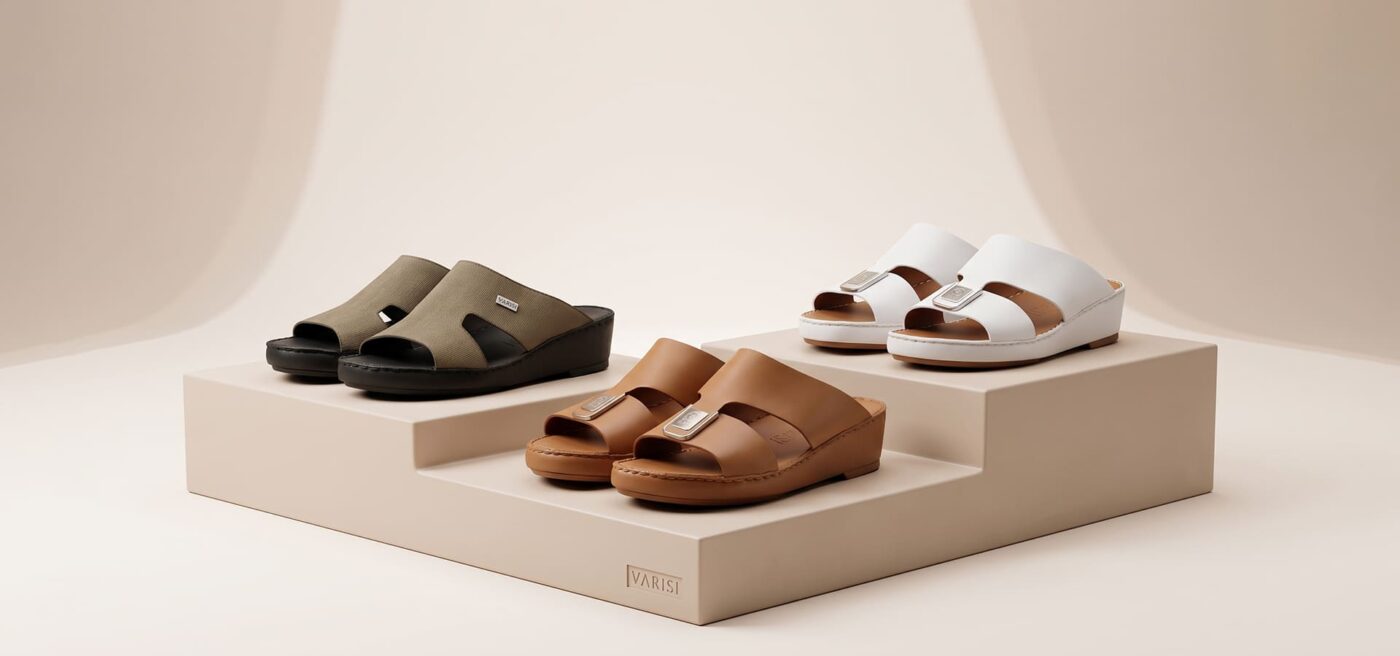
A shopkeeper in an old leather market once picked up two nearly identical sandals, handed them to us, and asked which one we’d wear for six months straight. The answer was obvious within seconds, not because of price tags or branding, but because of how each pair felt, bent, and smelled. That moment sums up everything worth knowing about men’s Arabic footwear: authenticity reveals itself fast once you know where to look.
At Varisi, this kind of hands-on evaluation happens constantly. We work closely with artisans who still shape leather the traditional way, and that exposure has taught us exactly which details separate genuine work from a convincing copy. This guide breaks those details down clearly, so the next time you’re shopping, you won’t need anyone else’s opinion to know what you’re holding.
Why Genuine Men’s Arabic Footwear Is Getting Harder to Find
The rise in demand for men’s Arabic footwear has attracted manufacturers more interested in speed than tradition. Factories now produce sandals that mimic traditional silhouettes using layered synthetics instead of tanned hide. From a few feet away, they look convincing. Up close, and especially after a few weeks of wear, the differences become obvious through cracking, peeling, or a stiffness that never softens.
This shift matters because most buyers aren’t purchasing men’s Arabic footwear as a one-time novelty. These are daily-wear pieces, used for prayer, errands, and long hours on hot pavement. A pair that fails after a short time doesn’t just waste money, it defeats the entire purpose of choosing traditional footwear in the first place.
The Problem With Today’s Footwear Market
Search for men’s Arabic footwear online and you’ll get flooded with options, many of them factory-made pieces dressed up to look traditional. The shape is copied perfectly. The materials are not. These pairs often use bonded synthetic layers pressed to resemble leather grain, and while they photograph well, they rarely survive more than a season of regular wear. This matters because traditional sandals and slippers aren’t just a fashion choice for most buyers. They’re worn daily, often for prayer, travel, and long hours on hard flooring. A pair that looks right but performs poorly ends up costing more in the long run than a slightly pricier, genuinely made pair would have.
How to Identify Authentic Men’s Arabic Footwear in Under a Minute
You don’t need to be a leather expert to catch a fake. A few physical checks, done in sequence, tell you almost everything.
Start With the Scent
Real leather carries a natural, slightly earthy smell that develops during the tanning process. Synthetic uppers, on the other hand, often carry a faint chemical or plastic odor, even when manufacturers try to mask it with fragrance sprays. Bringing the shoe close and smelling it before anything else is the fastest filter available.
Test the Flex Point
Bend the footwear gently at the ball of the foot. Genuine leather flexes with a soft, organic give and holds a slight crease afterward. Synthetic alternatives tend to either resist bending stiffly or snap back too quickly, since they lack the fibrous structure real hide has.
Examine the Underside of the Sole
A hand-cut leather sole shows small natural variations, slightly uneven edges, and subtle color shifts from the tanning process. A perfectly smooth, uniform underside with no texture at all is usually a sign of a molded synthetic base rather than real material.
What Makes Men’s Arabic Footwear Feel Different on the Foot
Beyond visual checks, comfort itself tells a story. Genuine men’s Arabic footwear molds slightly to the shape of your foot within the first few wears, something synthetic materials rarely do. This happens because natural leather fibers respond to heat and pressure over time, gradually softening in the areas where your foot presses hardest.
Synthetic soles, by contrast, tend to stay rigid indefinitely or break down unevenly, creating pressure points that cause discomfort during long wear. If a pair still feels exactly the same after weeks of regular use, showing no adaptation at all, that consistency is often a red flag rather than a good sign.
Luxury Arabic Sandals vs. Standard Men’s Arabic Footwear
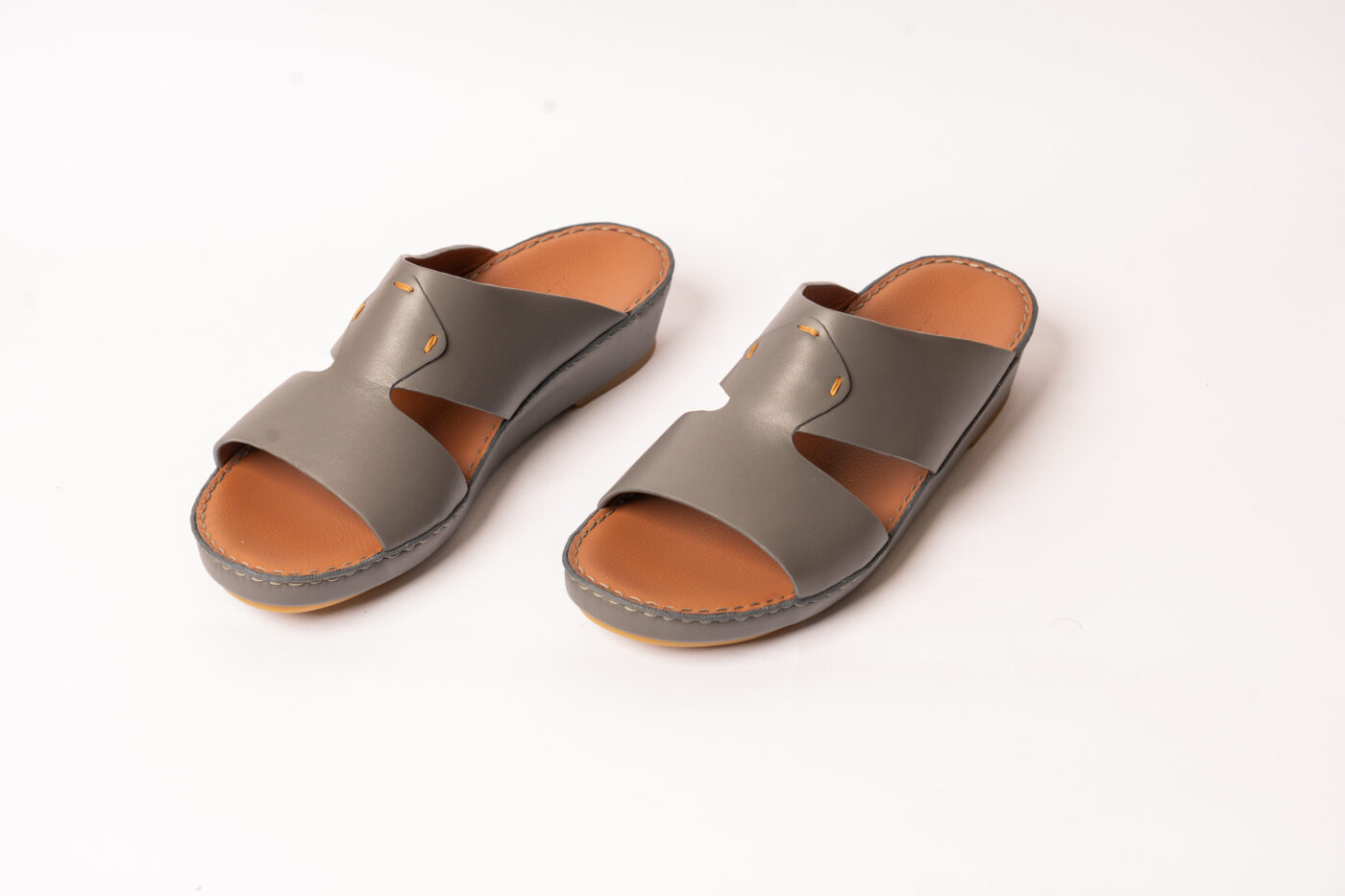
Not every authentic pair sits at the same tier. Within genuine men’s Arabic footwear, there’s a clear separation between everyday sandals and luxury Arabic sandals, and the gap comes down to sourcing and construction method rather than appearance alone.
Luxury Arabic sandals are typically cut from a single continuous section of full-grain hide, which keeps the leather’s fiber structure intact across the entire strap. This makes the material more resistant to stretching or tearing at stress points. Standard pairs often piece together smaller sections of leather, which works fine initially but tends to wear unevenly at the seams over months of use.
A few features that typically separate the two tiers:
- Leather cut: Single-piece construction versus multiple joined sections
- Finishing rounds: Multiple oiling and buffing passes versus a single quick finish
- Edge treatment: Hand-burnished edges versus raw or machine-sealed edges
- Hardware quality: Solid metal buckles versus lightweight plated alternatives
What Makes Mens Arabic Slippers Different to Evaluate
Slippers get judged by different standards than open sandals, mostly because they’re worn indoors for longer stretches. When shopping for mens Arabic slippers, a few extra details are worth checking beyond the five core tests above.
- Insole flexibility: Quality slippers use a softer, more pliable insole that shapes to your foot rather than staying rigid.
- Seam placement: Well-made slippers position seams away from pressure points like the ball of the foot, reducing rubbing over long wear.
- Heel structure: A slight reinforcement at the heel prevents the material from collapsing inward after repeated use, something cheaper slippers often lack entirely.
Because slippers are worn barefoot far more often than sandals, material quality has a bigger direct impact on comfort. A pair that fails the leather checks above will almost always feel worse against bare skin within weeks.
Shopping for Arabic Sandals in Qatar: A Local Perspective
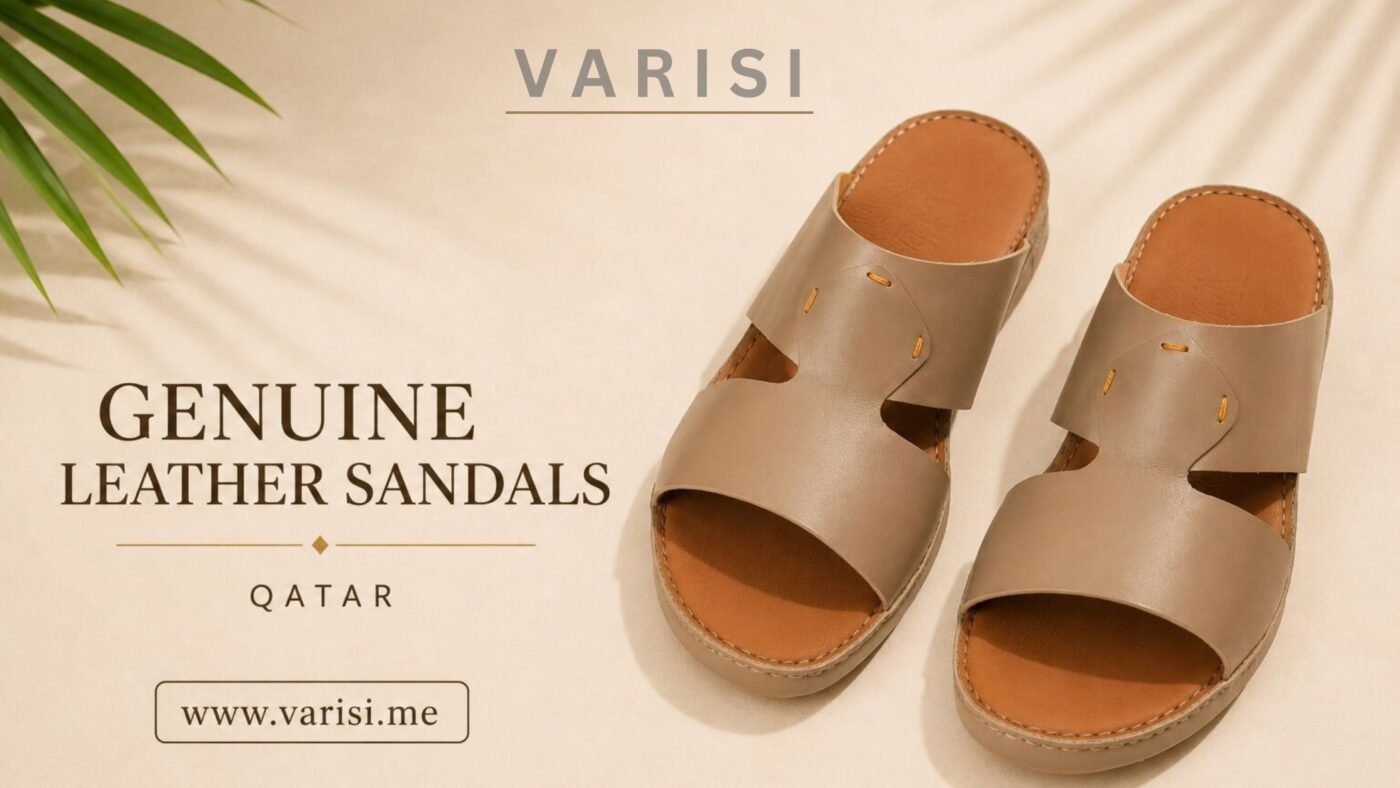
Buyers looking for Arabic sandals in Qatar face a particular challenge: the market includes everything from artisan-made pairs to bulk imports sitting on the very same shelf. Price alone won’t tell you which is which, since some imports are marked up to imitate premium pricing.
A few practical steps make shopping easier:
- Request to see the leather’s underside before buying, since sellers confident in their product rarely hesitate.
- Test two or three pairs from the same rack, since quality control can vary even within a single batch.
- Ask how long the sandals have been in stock, since older synthetic stock tends to develop a stronger chemical smell over time, making the smell test even easier.
Buying men’s Arabic footwear locally gives you a hands-on advantage that online shopping can’t fully replace, so use it. If you’re ordering online instead, insist on close, unedited photos of the sole edge and stitching before committing.
Simple Maintenance That Protects Your Investment
Even genuine leather needs upkeep, especially in hot, dry conditions where cracking happens fast without care.
- Wipe the leather down after each wear to remove salt and moisture from sweat.
- Condition the leather every couple of weeks using a natural oil-based product.
- Keep pairs out of direct sunlight when not in use, since prolonged heat exposure dries out the fibers.
- Let damp footwear air dry naturally rather than using direct heat sources, which can warp the shape.
Skipping these steps is one of the most common reasons people assume a genuine pair was poor quality, when the real cause was simply neglect.
Final Thoughts
Telling real men’s Arabic footwear from a convincing imitation isn’t complicated once you know what to check. Smell, pressure response, sole texture, stitch depth, and how the material reacts to warmth will tell you almost everything in under a minute. Layer that knowledge with an understanding of what separates standard pairs from luxury Arabic sandals, and you’ll shop with real confidence going forward.
Whether you’re after mens Arabic slippers for everyday comfort or searching specifically for Arabic sandals in Qatar, these same fundamentals hold true everywhere. At Varisi, every pair we offer is held to this exact standard, because genuine craftsmanship shouldn’t be something customers have to guess about.
Frequently Asked Questions
What’s the quickest way to check if men’s Arabic footwear is genuine?
Smell the leather first, then press your thumb into the upper. Real leather has an earthy scent and responds slowly to pressure, while synthetic material smells chemical and springs back instantly.
Do luxury Arabic sandals actually last longer than regular ones?
Generally, yes. They’re usually cut from a single piece of full-grain leather rather than smaller offcuts, which makes them more resistant to tearing and uneven wear over time.
What should I prioritize when buying mens Arabic slippers?
Look for a flexible insole, seams placed away from pressure points, and slight heel reinforcement, since these details affect comfort more in slippers than in open sandals.
Why is it harder to judge quality when shopping for Arabic sandals in Qatar?
Because genuine and imported synthetic pairs are often sold side by side at similar price points, so visual inspection alone isn’t enough. Checking the sole’s underside and comparing multiple pairs helps.
Ready to Feel the Difference Yourself?
Reading about genuine craftsmanship only goes so far. The real test happens the moment leather meets your foot, and that’s exactly the experience Varisi is built around. Every pair we offer goes through the same checks outlined in this guide before it ever reaches a customer, from the leather cut to the final stitch.
If you’re ready to stop guessing and start wearing footwear that’s actually built the traditional way, explore the full collection at Varisi and feel the difference authentic craftsmanship makes from the very first step.
Follow us on Instagram for the latest product updates, new arrivals, and exclusive offers.
Leave a comment