
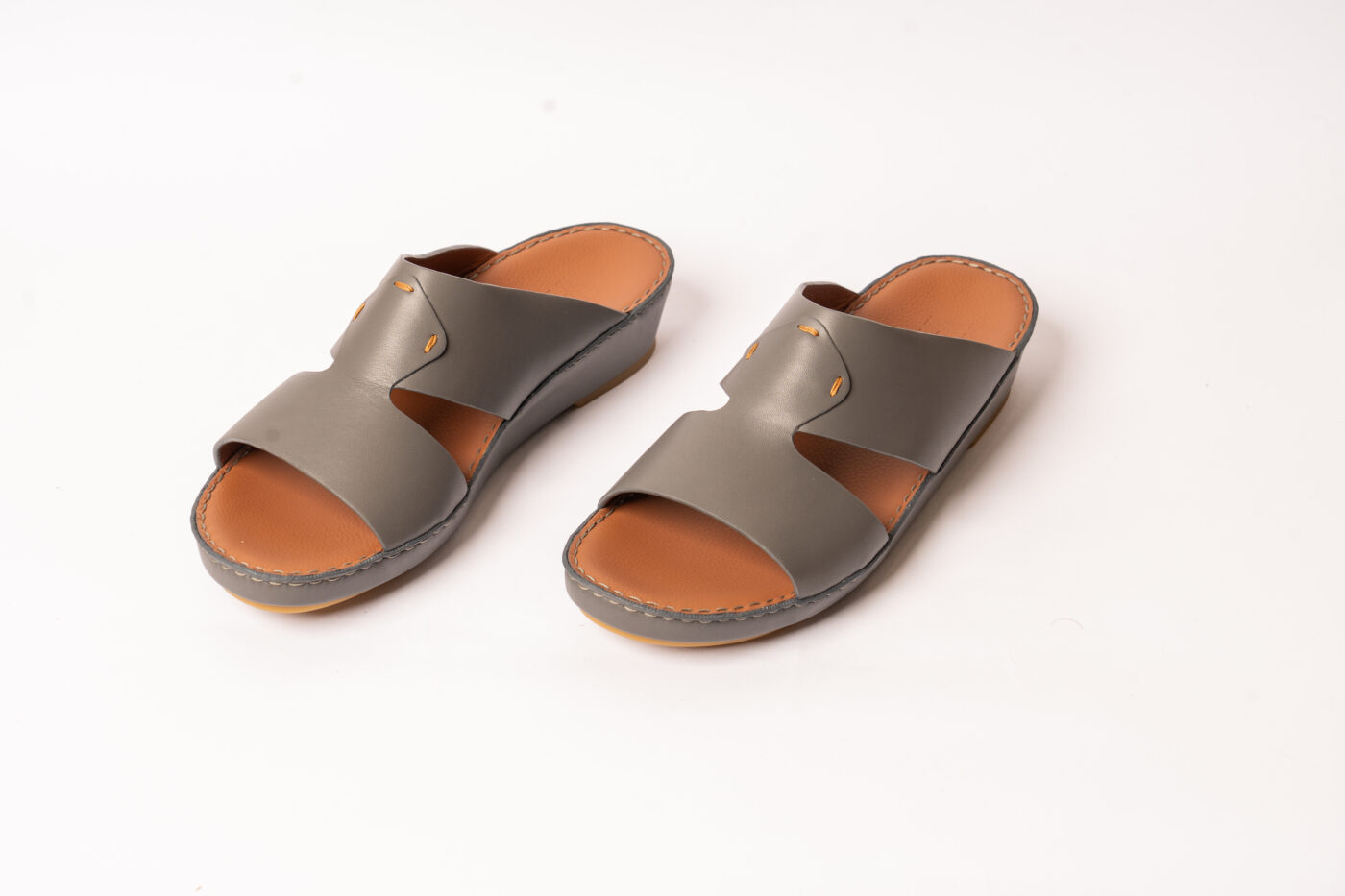
A decade ago, if you asked someone to picture men’s Arabic footwear, they would likely describe something worn at family gatherings, during prayer, or on Eid morning, then put away again until the next occasion. That picture no longer holds. Step into any coffee shop in Doha, Muscat, or Riyadh today and you will find sandals of this kind worn with everything from linen shirts to tailored trousers, on a completely ordinary Tuesday afternoon. Something has genuinely changed in how this footwear is understood, and Varisi has been paying close attention to exactly how that shift unfolded.
The Modern Meaning of Men’s Arabic Footwear
What used to signal where a man came from now says something about how he chooses to live. Men’s Arabic footwear has quietly taken on a second layer of meaning, sitting alongside its cultural roots rather than replacing them. It still nods to region and heritage, but it now also speaks to someone who values comfort, honest materials, and a slower approach to buying clothes and footwear in general. This shift has not diluted the tradition. If anything, it has given it a wider audience. Men who never grew up wearing sandals of this kind, whether through distance from the region or simply changing habits within their own families, are discovering them for entirely practical reasons and staying for the craftsmanship once they understand what went into making them.
The Workshop Before the Wardrobe
Before men’s Arabic footwear became a daily habit, it started as a workshop skill passed from one pair of hands to the next. In small leather workshops across the Gulf and the Levant, cobblers learned to read hide before they ever picked up a knife. A poorly cured skin would crack within weeks; a well-cured one could last a decade. That knowledge rarely made it into books. It was taught by watching, repeating, and failing until the cuts became second nature.
The shapes themselves were never arbitrary. A wide toe box gave the foot room to breathe in extreme heat. A low, flat sole kept the wearer grounded on sand and stone alike. Straps were positioned to avoid pressure points during long walks between prayer times. None of this was decorative thinking. It was footwear engineered by necessity, long before “functional design” became a marketing phrase.
Why Younger Buyers Changed Their Minds
Ask most men under forty why they now wear sandals of this style daily, and the answer rarely involves tradition first. It usually starts with comfort.
The Trainers Fatigue
Years of wearing trainers in 40-degree heat left a lot of men with sweaty feet, poor ventilation, and shoes that broke down within a single summer. Switching to open leather sandals solved a problem that synthetic footwear was never built to handle in this climate.
Social Proof Through Travel
As Gulf residents travelled more and saw how international menswear circles were referencing similar silhouettes, wearing mens Arabic sandals outside the home stopped feeling old-fashioned. It started feeling, quite simply, like good sense.
A Shift Away from Disposable Fashion
There has also been a quieter change in mindset. Buyers grew tired of replacing cheap shoes every few months. A well-made pair of Arabic leather sandals, by contrast, tends to improve with age rather than fall apart.
How to Recognise Genuine Men’s Arabic Footwear Before You Buy
Not every sandal sold under this name deserves the description. Telling a genuine pair from an imitation takes a closer look than most buyers are used to giving their footwear.
- Press your thumb into the leather. Genuine hide gives slightly and returns to shape; cheap coated material stays stiff or feels tacky.
- Check the underside of the strap where it meets the sole. Hand-stitched joins are usually uneven in a way that machine work never is, and that unevenness is a good sign, not a flaw.
- Smell the leather. A faint, natural leather scent suggests proper tanning; a strong chemical smell often means synthetic backing.
- Flex the sole in your hands. It should bend with some resistance, not fold flatly like cardboard or refuse to move at all.
Buyers who check these details before purchasing tend to walk away with sandals that last years rather than a single season, which is really the whole point of choosing men’s Arabic footwear over a mass-produced alternative in the first place.
The Doha Effect: How Qatar Changed the Conversation Around Men’s Arabic Footwear
Few markets illustrate this shift as clearly as Qatar. Arabic sandals in Qatar were once sold mainly in traditional souqs, aimed at an older, more conservative customer base. Over the past several years, that has changed considerably.
Retailers in Doha now stock these sandals alongside contemporary menswear, not tucked away in a separate cultural section. Younger buyers walk in expecting proper sizing charts, clear material information, and finishes that suit a modern wardrobe rather than a strictly ceremonial one. This demand pushed makers, including Varisi, to raise their own standards around consistency, fit, and long-term durability, because a customer buying sandals for daily wear expects a very different level of performance than someone buying a single pair for a wedding.
The result is a market where heritage and modern retail expectations now sit comfortably side by side, rather than pulling in opposite directions.
What “Luxury” Actually Means in This Context
The term luxury Arabic sandals gets used loosely, often attached to anything with a higher price tag. A more honest definition focuses on what actually goes into the product rather than what it costs.
Material Honesty
A genuinely premium pair uses full-grain leather throughout, including the insole, rather than a good-looking exterior layered over a cheaper synthetic core.
Visible Craftsmanship
Hand-burnished edges, reinforced stitch lines at pressure points, and symmetrical strap placement are small details, but they separate a well-made pair from one that simply photographs well.
Repairability
A sandal built to last should also be a sandal built to be repaired. Resoling and restitching should be realistic options, not something the design quietly prevents.
This is the standard Varisi holds itself to, because calling something luxury without the craftsmanship to back it up does a disservice to a tradition that never needed exaggeration to justify its value.
Choosing Men’s Arabic Footwear for Life, Not Just an Occasion
If you are buying your first proper pair, a few practical steps will save you from disappointment later.
Wear them indoors first. Walk around your home for an hour before taking them outside, to check for pressure points early.
Buy true to size, not tight. Leather stretches slightly with wear, so a snug fit at purchase usually loosens into a comfortable one.
Condition the leather every few months. A light leather balm keeps the material supple and prevents cracking in dry heat.
Rotate two pairs if you wear them daily. Giving leather a day to rest between wears extends its lifespan considerably.
Following these steps is a small effort that pays off across years rather than months, which is exactly why so many men have shifted from treating this footwear as occasional wear to relying on it every single day.
Step Into Comfort: Discover Men’s Arabic Footwear at Varisi
Reading about good craftsmanship is one thing; feeling it on your own feet is another matter entirely. If your current footwear rotation still leaves your feet sweating through the afternoon or wearing thin after a few months, it may be time to try something built with more thought behind it. Varisi’s collection is put together by people who care whether a strap sits right after ten hours of wear, not just how a pair looks in a photograph. Browse the range, find a fit that suits your daily routine, and see for yourself why so many men have already made the change.
Conclusion
The story of men’s Arabic footwear is not one of reinvention for its own sake. It is a story of a practical, well-considered tradition finally being recognised for what it always offered: comfort suited to the climate, craftsmanship built to last, and a design language that never actually needed updating to stay relevant. Whether someone is choosing Arabic leather sandals for a hot commute, seeking out Arabic sandals in Qatar with proper sizing and finish, or investing in a genuinely luxury Arabic sandals pair meant to last for years, the appeal comes from the same place. At Varisi, that is the standard behind every pair leaving the workshop.
Frequently Asked Questions
Is men’s Arabic footwear suitable for everyday use, or only special occasions?
Well-constructed pairs are increasingly worn daily, particularly in hot climates where breathable, flat leather sandals outperform closed footwear.
How can I tell if a pair of mens Arabic sandals is genuine leather?
Check for a natural leather scent, slight give when pressed, and uneven hand-stitching at the strap joins, all signs of authentic material and construction.
Why has demand for Arabic sandals in Qatar grown in recent years?
Retailers have shifted from treating them as ceremonial items to stocking them as everyday menswear, matching a younger customer base that wants both tradition and daily practicality.
What separates luxury Arabic sandals from a standard pair?
Full-grain leather throughout, visible hand-finishing, and the ability to be resoled or repaired rather than discarded after light wear.
How long should a good pair of Arabic leather sandals last?
With proper care, including regular conditioning, a well-made pair can comfortably last several years before needing repair.
Leave a comment