
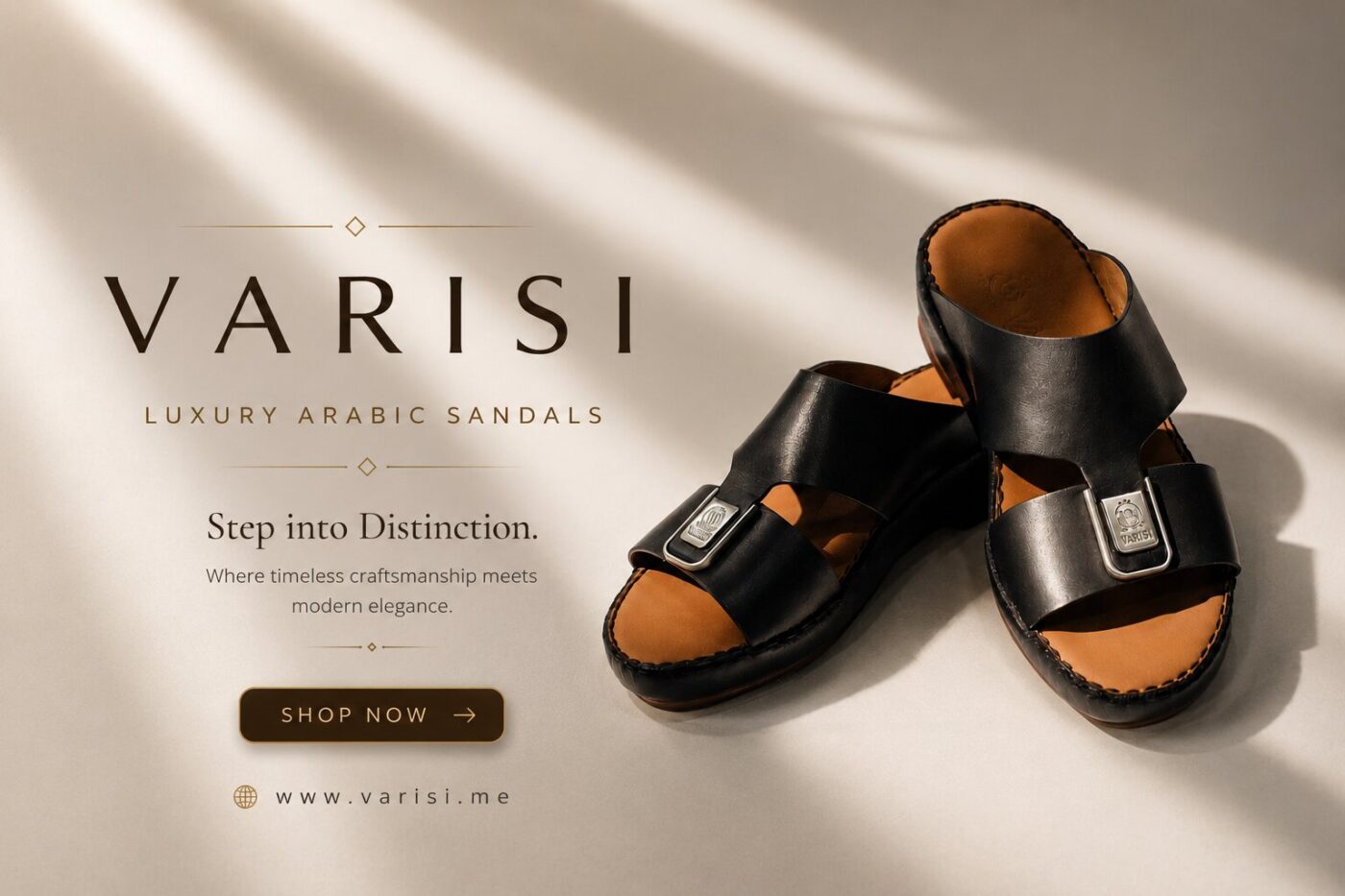
A well-made pair of luxury Arabic sandals is more than a finishing touch to an outfit. Its quality depends on the leather, the precision of the cutting, the construction of the sole, and the small details that influence comfort and appearance. From selecting suitable raw materials to shaping the final silhouette, every stage contributes to the character of the finished footwear. For men who appreciate traditional Middle Eastern style with a refined, contemporary look, understanding this process makes choosing the right pair much easier.
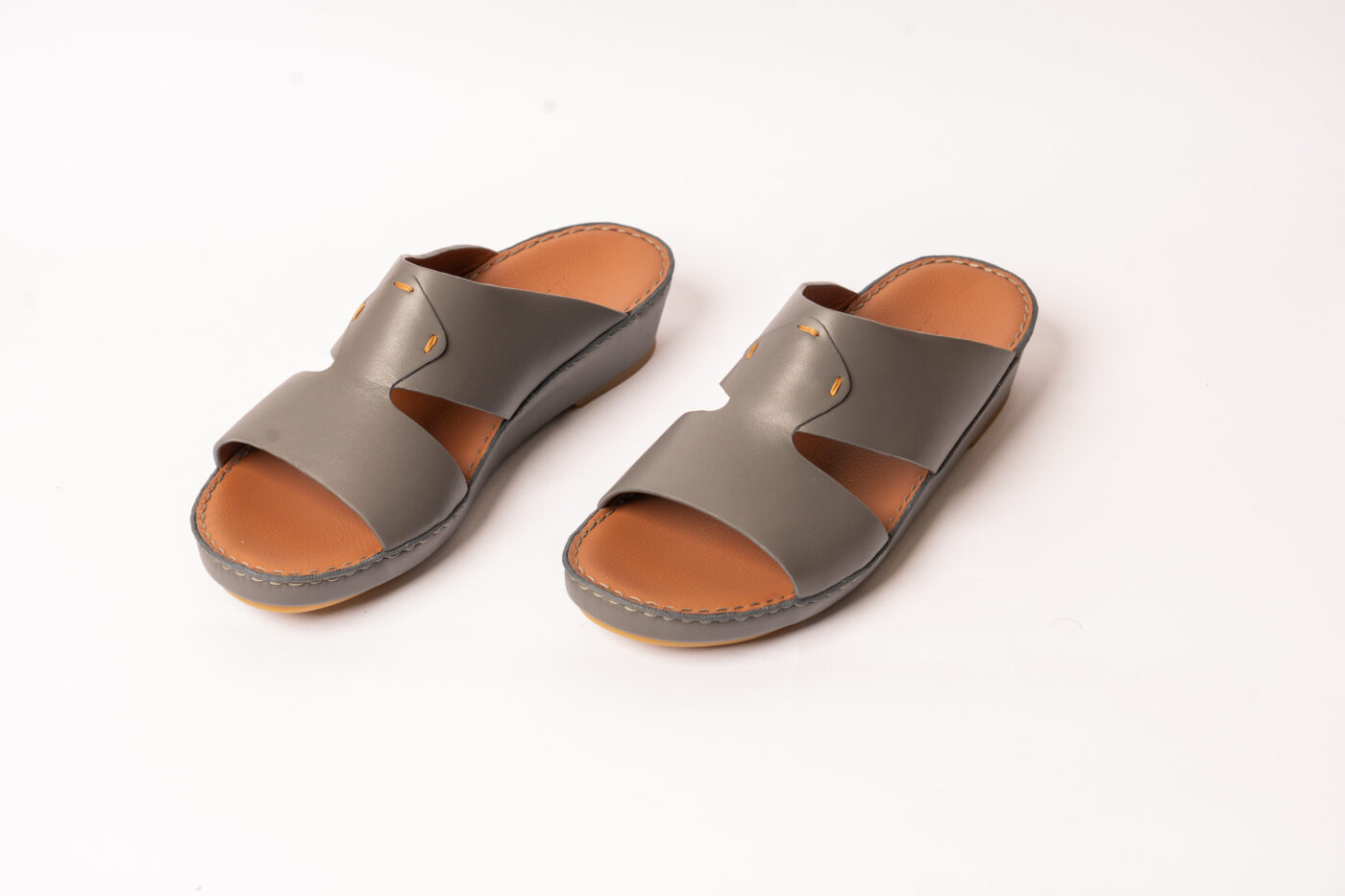
At Varisi, the V500 Calf Black offers a useful starting point for exploring the appeal of black calf leather footwear. Its understated color makes it a versatile option for men who prefer a polished appearance without unnecessary decoration. Looking beyond the finished product reveals why material selection, craftsmanship, fit, and proper care matter when investing in quality Arabic-inspired sandals.
What Makes Luxury Arabic Sandals Different?
Arabic sandals have a distinctive place in Middle Eastern footwear, combining practical open footwear with designs suited to traditional clothing and modern wardrobes. Depending on the style, they may feature broad or narrow straps, carefully shaped footbeds, minimal ornamentation, and construction intended for everyday wear or more formal occasions.
The luxury element is not simply a higher price or a glossy finish. It comes from the overall execution of the product. Clean edges, consistent stitching where applicable, balanced proportions, comfortable contact points, and a well-finished surface all contribute to the final result.
Quality also depends on how the sandal performs after repeated use. A beautiful design should still fit securely, feel comfortable underfoot, and maintain its appearance with appropriate care. These practical considerations separate a thoughtful footwear purchase from one based on appearance alone.
The Journey of Luxury Arabic Sandals Begins with Raw Leather
Selecting Leather for Quality and Appearance
Leather selection is one of the earliest decisions in footwear production. The material influences the sandal’s texture, flexibility, durability, and ability to develop character over time. Different leather types behave differently during cutting, shaping, finishing, and wear, so the material must suit the intended design.
Calf leather comes from young cattle and is commonly valued in premium leather goods for its relatively fine grain and smooth appearance. Depending on how it is processed, it can offer a refined surface that works particularly well with minimalist footwear.
However, the word “calf” alone does not guarantee a particular quality level. The hide’s condition, tanning method, finishing treatment, thickness, and consistency all influence the result. Buyers should also distinguish between genuine leather and synthetic materials rather than assuming that every material with a leather-like appearance has the same properties.
For black sandals, the quality of the surface finish is especially noticeable. Uneven coloration, poorly finished edges, and visible inconsistencies can affect the overall appearance. Careful material selection helps create a more consistent finished product.
Preparing the Leather Before Production
Raw hides cannot simply be cut into straps and attached to a sole. Leather generally passes through preparation and processing stages before it becomes suitable for footwear. These can include preservation, tanning, drying, grading, trimming, and finishing, depending on the supplier and production method.
Tanning stabilizes the hide so it is less susceptible to decomposition and more suitable for practical use. Different tanning processes produce different characteristics in terms of firmness, flexibility, color, and response to moisture.
Once the leather is prepared, it is inspected for defects and variations. Areas with prominent marks, weak sections, or inconsistent thickness may need to be avoided for particular components. This is important because sandal straps must withstand repeated bending and tension while maintaining their shape.
For manufacturers, preparation is also about consistency. Leather that is too stiff may feel uncomfortable around the foot, while leather that is excessively soft for a particular design may stretch more than intended. The appropriate balance depends on the sandal’s construction and intended use.
How Luxury Arabic Sandals Take Shape
Creating the Pattern and Cutting Each Component
Pattern development translates a design into individual pieces that can be cut and assembled. The pattern must account for the sandal’s proportions, strap placement, foot shape, and the relationship between the upper and the sole.
Precision matters because small differences can affect the way a sandal sits on the foot. A strap that is too tight may create pressure, while one that is too loose may allow the foot to move excessively. Poorly aligned components can also make a finished pair appear uneven.
During cutting, manufacturers select appropriate sections of leather for the required pieces. Depending on the production setup, this work may involve hand tools, cutting dies, or specialized machinery.
The main considerations include:
- Consistent dimensions: Matching components help maintain a balanced appearance across both sandals.
- Efficient material use: Thoughtful cutting reduces unnecessary waste.
- Grain direction: The orientation of the leather can influence how a component stretches and bends.
- Surface quality: Visible parts should have an appropriate, consistent finish.
- Structural suitability: Areas under repeated tension need suitable material and construction.
This stage demonstrates why good footwear production requires more than an attractive design. The pattern and cutting decisions influence comfort, appearance, and long-term performance.
Shaping the Straps and Refining the Edges
The upper gives Arabic sandals much of their visual identity. Some designs use a simple arrangement of straps, while others have more distinctive shapes or decorative elements. Whatever the style, the upper must balance appearance with the practical demands of movement.
Leather edges deserve particular attention. Depending on the design, they may be trimmed, smoothed, burnished, painted, or finished using another suitable method. The objective is to create an edge that looks clean and feels comfortable against the skin.
Poorly finished edges can feel rough, show premature wear, or detract from an otherwise attractive sandal. Similarly, strap openings, attachment points, and bends must be handled carefully to avoid unnecessary stress on the material.
The finishing method should suit the leather and the sandal’s construction. Not every technique is appropriate for every type of leather, and an elaborate finish is not automatically better than a restrained one. In well-designed footwear, the details support the overall form rather than distract from it.
Building the Sole for Support and Stability
A sandal’s sole affects more than its appearance. It influences flexibility, traction, ground feel, and the way pressure is distributed across the foot. The ideal construction depends on the materials used, the intended environment, and the design’s priorities.
The footbed should accommodate the wearer’s foot without creating unnecessary pressure points. Sole thickness, shape, and flexibility can all influence comfort. Meanwhile, the outsole should provide suitable grip for the surfaces on which the sandal will normally be worn.
Different footwear designs use different combinations of leather, rubber, and other materials. Leather may contribute a traditional appearance, while suitable rubber compounds can provide useful traction and abrasion resistance. The presence of a particular material does not, by itself, establish the overall quality of the sandal.
When evaluating premium footwear, look for a sole that sits evenly, an upper that is securely attached, and a construction that feels stable during ordinary walking. These are more meaningful indicators than decorative details alone.
Assembling the Finished Sandal
Assembly brings the individual components together. Depending on the design, the process may involve stitching, adhesives, mechanical fastening, or a combination of methods. The appropriate technique depends on the materials and the intended construction.
Alignment is critical during this stage. Both sandals should have consistent proportions, and the straps should sit in corresponding positions. The upper must also be attached securely enough to withstand normal use.
Quality checks can identify issues such as uneven edges, loose threads, visible adhesive residue, irregular coloring, or inconsistent strap placement. A careful inspection also considers whether the sole is properly aligned and whether the finished footwear matches the intended design.
Not every premium sandal is handmade from beginning to end. Some manufacturers combine skilled manual work with machinery to improve precision and repeatability. What matters to the buyer is the quality of the final product, the suitability of its materials, and the consistency of its construction.
Why Luxury Arabic Sandals Require Attention to Detail
Finishing, Inspection, and Final Quality Checks
The final stage focuses on appearance, consistency, and usability. Surface treatments may be applied to achieve a particular color or sheen, while finishing work helps refine the visible edges and components.
Black leather sandals illustrate the importance of this stage. A uniform black finish can create a sharp, understated look, but the surface should also be appropriate for the leather beneath it. Excessive polishing cannot compensate for poor construction or unsuitable materials.
Before a pair is ready for use, a thorough inspection should consider:
- Whether both sandals match in shape and finish.
- Whether straps and attachment points appear secure.
- Whether the edges feel smooth and appropriately finished.
- Whether the soles are aligned and free from obvious defects.
- Whether the footbed and straps appear suitable for the intended fit.
- Whether the product matches its stated material and design specifications.
These checks help establish consistency, although they cannot guarantee how every pair will perform under every condition. Actual durability also depends on materials, construction, frequency of use, exposure to moisture, and maintenance.
Choosing Luxury Arabic Sandals for Everyday Style
The manufacturing process explains how sandals are made, but choosing the right pair requires considering how they will fit into your lifestyle. A sandal intended for occasional formal wear may have different priorities from one designed for frequent walking or daily errands.
How to Style Black Arabic Leather Sandals
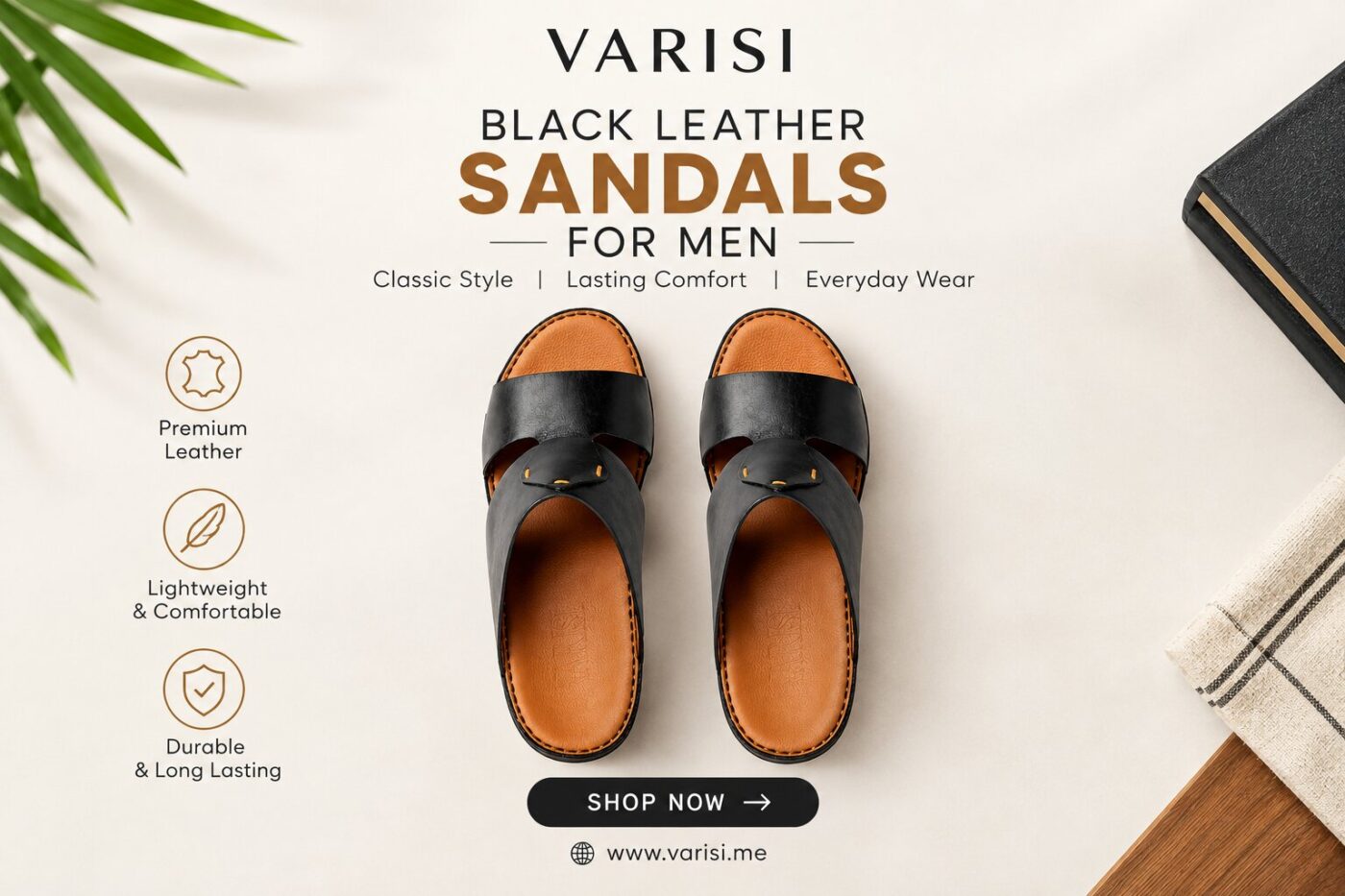
Black footwear is popular because it works with a wide range of colors and clothing styles. The V500 Calf Black from Varisi is a relevant option to explore if you prefer a clean, dark finish and a traditional Arabic-inspired aesthetic.
Consider these combinations when styling Arabic leather sandals:
- With a traditional thobe: Black sandals create a restrained, coordinated appearance without competing with the clothing.
- With tailored trousers: Choose trousers with a clean hem to maintain balanced proportions and keep the footwear visible.
- With linen clothing: Neutral linen shirts and lightweight trousers create a relaxed look suited to warm weather.
- With smart-casual outfits: A simple shirt and well-fitted trousers complement minimalist sandals without making the outfit look overly formal.
When selecting mens Arabic sandals, pay attention to strap placement, the width of the footbed, and whether your heel sits comfortably within the sole. Your toes should not extend beyond the front edge, and the straps should hold the foot securely without pinching.
What to Consider When Buying Luxury Sandals in Qatar
Climate and daily routines are important considerations when shopping for luxury sandals in Qatar. Warm conditions make breathable footwear appealing, but leather still requires sensible care, particularly when exposed to heat, sweat, dust, or moisture.
Before purchasing, evaluate the following factors:
- Material: Check the product description to understand whether the upper is calf leather, another type of leather, or a synthetic alternative.
- Fit: Try the sandals on, if possible, and walk a short distance. Your foot should feel supported without excessive movement or uncomfortable pressure.
- Sole construction: Consider the intended walking surfaces and look for suitable traction and secure attachment.
- Versatility: A black pair can work with traditional clothing and many smart-casual outfits, making it a practical addition to a footwear collection.
- Care requirements: Ask about suitable cleaning products and conditioning methods for the specific leather finish.
For shoppers exploring premium Arabic-inspired footwear, the Varisi V500 Calf Black product page provides a useful place to review the model’s available details before making a decision.
How to Care for Luxury Arabic Sandals and Preserve Their Finish
Good leather footwear benefits from regular, appropriate maintenance. Even well-constructed sandals can lose their appearance prematurely if they are repeatedly exposed to moisture, excessive heat, or unsuitable cleaning products.
Follow these practical steps:
- Remove surface dust: Use a soft, dry cloth after wearing the sandals.
- Address dirt carefully: Wipe the affected area with a slightly damp cloth when appropriate, avoiding excessive water.
- Allow natural drying: If the sandals become wet, let them dry at room temperature, away from direct sunlight and heaters.
- Use suitable leather care products: Test any cleaner or conditioner on a discreet area first and follow the manufacturer’s instructions.
- Store them properly: Keep the sandals in a clean, dry, ventilated place away from prolonged direct sunlight.
- Rotate your footwear: Alternating pairs gives leather footwear time to dry between uses.
Avoid assuming that every leather product requires the same treatment. Some finishes respond poorly to oils, waxes, or conditioners intended for other leather types. When in doubt, follow the care instructions provided by the manufacturer.
Frequently Asked Questions About Luxury Arabic Sandals
What makes luxury Arabic sandals worth considering?
Their appeal comes from a combination of design, material selection, construction quality, fit, and finishing. A well-made pair can complement traditional and contemporary clothing, provided it suits the wearer’s needs.
Is calf leather suitable for Arabic sandals?
Calf leather is commonly used in premium leather goods because it can offer a fine grain and refined appearance. Its suitability depends on the leather’s processing, thickness, finish, and the sandal’s construction.
How can I choose comfortable mens Arabic sandals?
Check the footbed length and width, strap placement, heel stability, and sole flexibility. The sandals should feel secure without rubbing or creating pressure points. Comfort can vary with individual foot shape.
Are black Arabic leather sandals versatile?
Yes. Black is easy to coordinate with traditional garments, neutral trousers, and many smart-casual outfits. The sandal’s design and finish will determine how formal or relaxed it looks.
How should I maintain leather sandals in Qatar’s climate?
Remove dust regularly, avoid prolonged exposure to direct heat, and allow the sandals to dry naturally after perspiration or moisture. Use leather care products appropriate for the specific finish.
Where can I explore the Varisi V500 Calf Black?
You can view the product details on the Varisi V500 Calf Black product page. Review the listed specifications, materials, sizing information, and care guidance before purchasing.
From Raw Leather to a Refined Finish: The Value of Thoughtful Craftsmanship
The journey from raw leather to finished footwear involves a series of decisions that shape how a sandal looks, feels, and performs. Leather selection establishes the material’s character, precise cutting defines its proportions, careful assembly brings the design together, and final inspection helps maintain consistency.
For anyone considering luxury Arabic sandals, these details offer a more practical way to evaluate quality than appearance or price alone. Material transparency, a comfortable fit, reliable construction, and appropriate care all contribute to a satisfying purchase.
The Varisi V500 Calf Black is worth exploring if you are looking for a black, calf-leather Arabic-inspired style. By understanding the craftsmanship behind the footwear and checking the product’s actual specifications, you can make a more informed choice that balances personal style with everyday practicality.
Follow us on Instagram for the latest product updates, new arrivals, and exclusive offers.
Leave a comment